

Advisory and Consulting HSe Services
How do I conduct a fire risk assessment for my business in Nigeria? It is one of the most important questions any business owner or
How do I conduct a fire risk assessment for my business in Nigeria? It is one of the most important questions any business owner or
A source from Aviation Safety Networks – recorded aviation accidents from 1942 to 2021 with airliner accidents ranging from 8 to 99, and fatalities range from 59 to 2389. Corp jet accidents ranging from zero to 13 and fatalities ranging from zero to 78 were recorded. Hijacking accidents ranging from zero to 86 and fatalities ranging from zero to 268 were recorded. These statistics clearly show that the magnitude of loss of life and asset were significant, and are evident that the aviation safety is a high hazard or high-risk level if not properly managed to reduce risk to As-Low-As-Reasonably Practicable (ALARP). Safety Experts are thus required to carry out safety studies and reviews for both life and fire safety, technical and process safety, and environmental safety at conception, design, procurement, installation, and maintenance stages of aviation assets. We focus more on the life and fire safety compliance aspects as they apply to the aviation sector in this context. A structured framework consisting of sets of processes, and tools for management of safety systems and programs are inevitable for aviation industry.
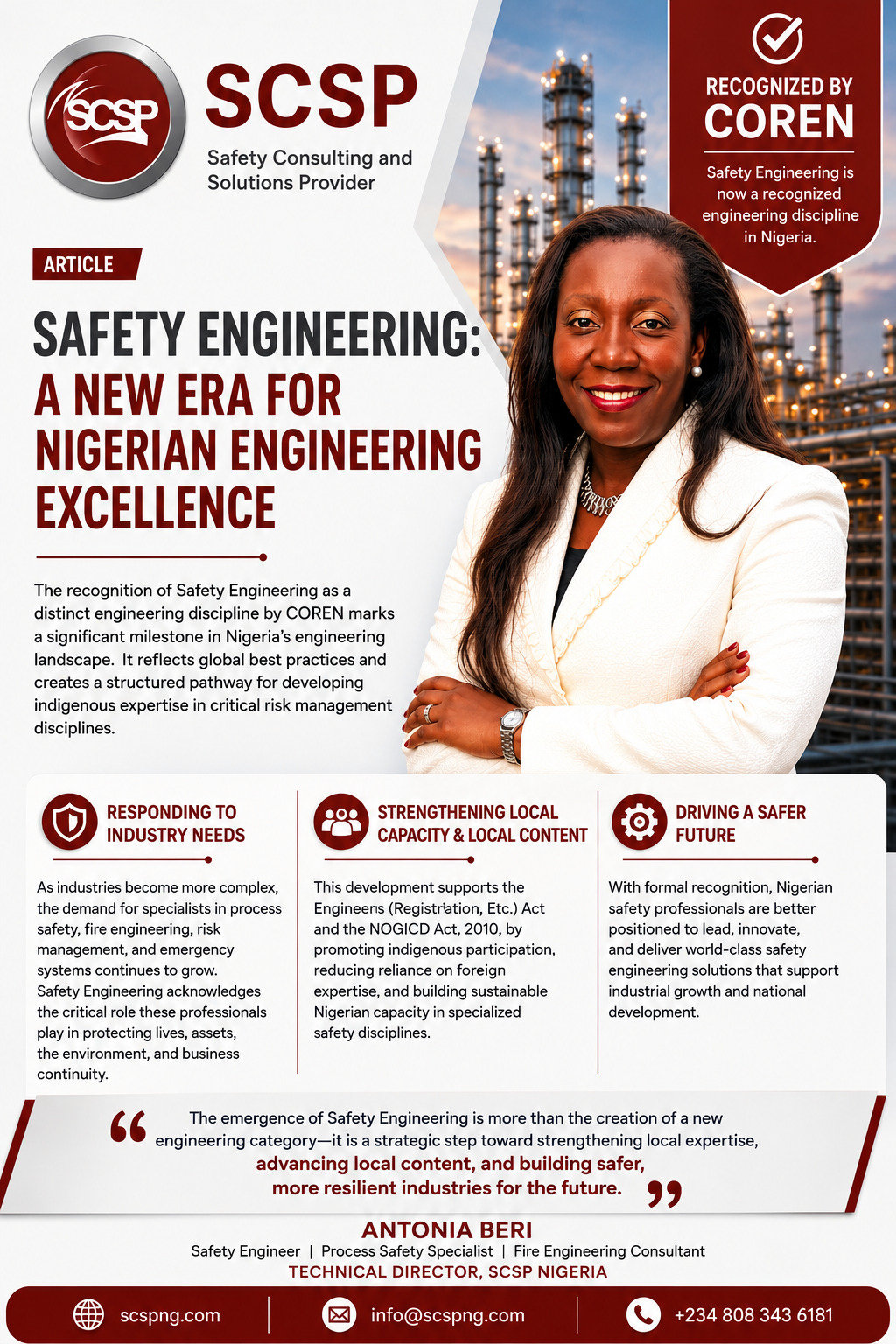
The recognition of Safety Engineering as a distinct engineering discipline by the Council for the Regulation of Engineering in Nigeria (COREN) marks a significant milestone
INTRODUCTION In every organization, Risk assessment is the backbone of effective safety management. Whether you operate in construction, manufacturing, healthcare, or office administration, understanding how
Global corporations are prioritizing asset protection as a cornerstone of sustainable growth. Engineering excellence has emerged as a critical strategy for safeguarding physical and digital
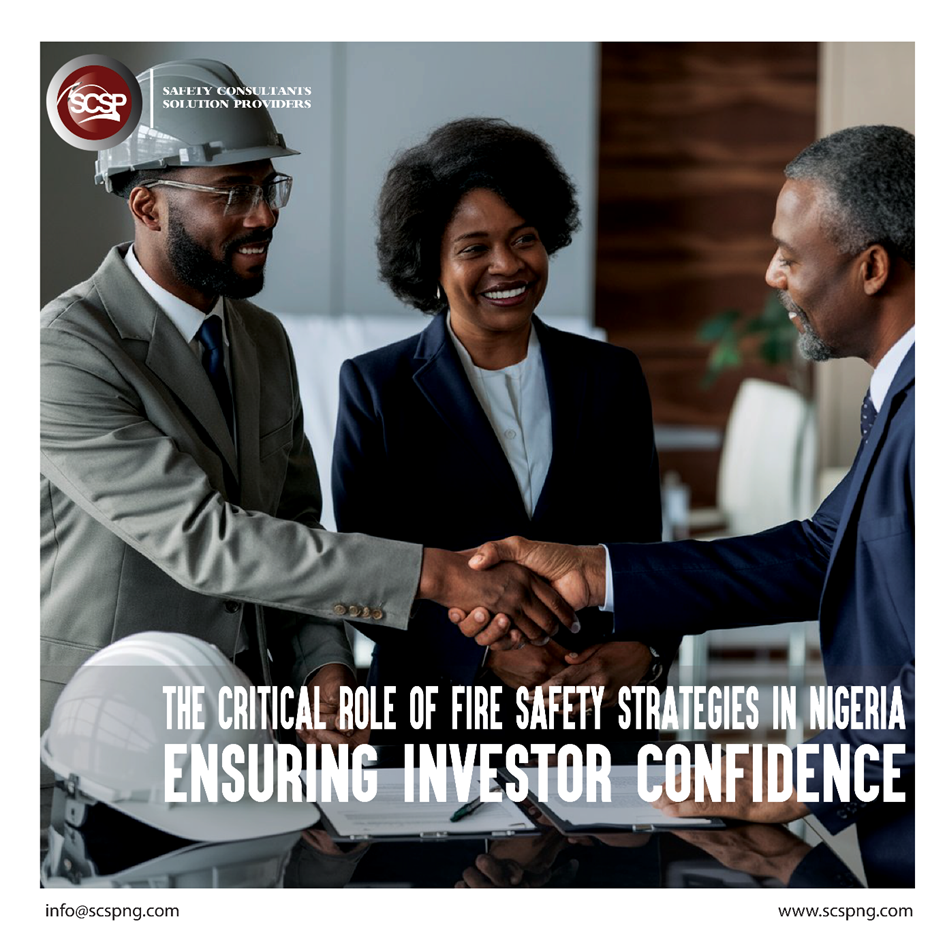
Investor confidence is fundamentally shaped by a company’s demonstrated commitment to robust risk management and operational resilience, particularly through the implementation of comprehensive safety strategies.
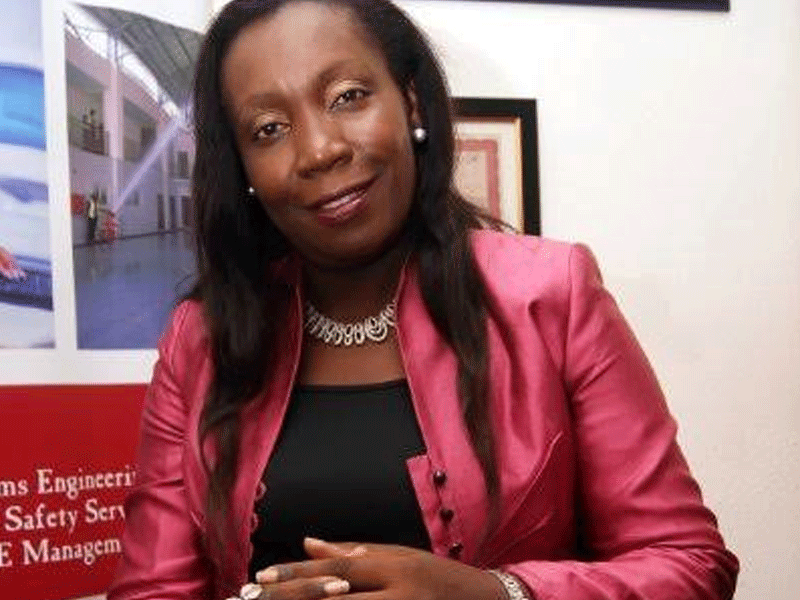
An Exclusive Interview with SCSP Expert Antonia Beri on Managing Business Risk Link to THISDAY LIVE: Managing Business Risks – THISDAYLIVE In the wake of

ISO/IEC 27032 addresses, defined “Cybersecurity” or “the Cyberspace security” as the “preservation of confidentiality, integrity, and availability of information in the Cyberspace”. In turn “Cyberspace” is defined as “the complex environment resulting from the interaction of people, software and services on the Internet by means of technology devices and networks connected to it, which does not exist in any physical form”.
Cybersecurity is becoming a critical issue as most businesses now use computers in their day-to-day operations. The use of computers for the storage of the most sensitive data of most businesses presents its own risk and threat to business continuity.
Owing to the increasing cases of catastrophic and deadly events across the world, there is the need to change the narrative;
Process safety among many other values sustains economic prosperity and environmental sustainability. This is through periodic assessment and instalment of prevention equipment and personnel. It is agreed that technical process and safety impacts people, communities, asset and environment (McLennan, 2018).
It also strengthens inter- sectoral harmony. As a multi-disciplinary approach, it brings professionals of different fields and synergizes a union dedicated safety and technical performance. This collaborative potential enhances a fusion of safety excellence and bond of technical excellence within stakeholders (Shariff, 2017) .
Technical process safety hinders major catastrophes from happenings (injuries and fatalities) and promote safe workforce (people and equipment). The entire process seeks to attain safety and loss of viable economic and productivity resources.